A Change In Perspective
A Change In Perspective
This Dvar Torah was originally published in Torah && Tech, the weekly newsletter I publish together with my good friend Ben Greenberg. To get the weekly issue delivered straight to your inbox click here.
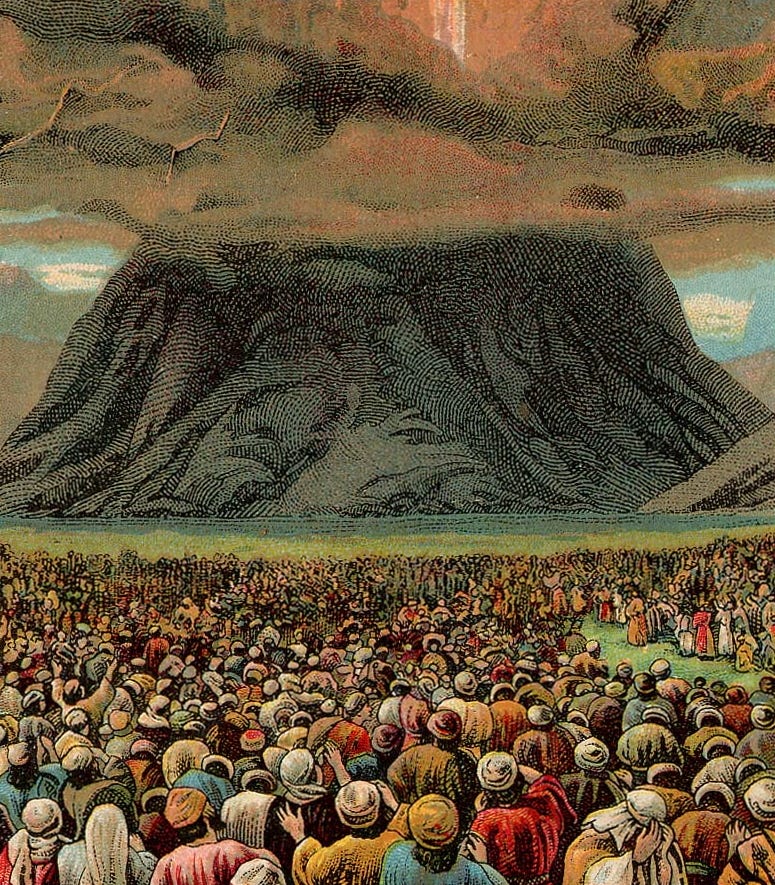
This coming week is Shavuot, the holiday when we commemorate the revelation on Mount Sinai and the giving of the Torah.
The Torah describes this monumental occasion in vivid detail. But upon closer inspection, one verse seems a little strange (Shemot 20:15):
וְכָל־הָעָם֩ רֹאִ֨ים אֶת־הַקּוֹלֹ֜ת וְאֶת־הַלַּפִּידִ֗ם וְאֵת֙ ק֣וֹל הַשֹּׁפָ֔ר וְאֶת־הָהָ֖ר עָשֵׁ֑ן…
And all the people saw the voices and the torches, the sound of the shofar, and the smoking mountain…
What does it mean for people to “see the voices… and the sound of the Shofar”?
Rabbi Akiva, one of the greatest Talmudic sages, explained that a miracle occurred and the Jewish people “saw that which is [usually] heard, and heard that which is [usually] seen,” but that explanation raises more questions than it answers. What is the point of such a miracle? Why was seeing that which is heard and hearing that which is seen a necessary part of the giving of the Torah?
In data science, we place great importance on how we present and visualize our data. The way we present our data can have a significant impact on how we understand and consume it.
What can seem like a mess of disjointed coordinates becomes an elegant curve when plotted on a graph.
What can look like a bunch of random numbers (say, 54 6f 72 61 68 20 26 26 20 54 65 63 68 for example) when encoded in a slightly different way can convey the name of a great learning resource.
Sometimes, just changing the way you look at the same data can change its meaning drastically.
There’s a story about the famous Chassidic master, Rabbi Levi Yitzchak of Berditchev (1740–1809) known for his nickname “the advocate of the Jewish people” for his hobby of spinning even the most seemingly negative traits in a positive view once told his students:
I don’t know what G-D wants from the Jewish people; had he put the world to come in front of their eyes and the current materialistic world in books, there is no doubt that everyone would only pursue lofty spiritual goals. Instead, G-D put materialism in front of their eyes, and spirituality and the world to come he placed in books, is there any wonder that Jews struggle?
Chassidic philosophy explains the difference between that which is “seen” and that which is “heard” as follows: something you see is something you experience directly, something you hear is something you can only experience indirectly.
For most of us living our lives in the physical world, physicality and materialism is the stuff we “see” and experience directly. Spirituality and G-Dliness is something we “hear” and learn about, but don’t experience directly in our day-to-day lives.
During the revelation at Mount Sinai, the Jewish people experienced G-D at such a direct level, that spirituality and G-Dliness became things that they “saw” and experienced in a very real sense. Meanwhile, the physical materialism of this world, while still existing, was so far removed from their direct experience that it was relegated to the realm of things that are “heard.”
May we all merit to experience just a brief moment of that clarity this year, and may we accept and internalize the Torah this Shavuot with joy!
Comments