Hacking A Miracle
Hacking A Miracle
Purim Sameach!
Next week, Monday night and Tuesday, Jewish people around the world will celebrate the holiday of Purim.
Purim is when we commemorate the time when Haman, the anti-semitic viceroy to the Persian king Achashverosh, wanted to destroy the Jewish nation, only to have his plans foiled by the Jewish Queen Esther and her uncle Mordechai.
Purim is not the only holiday where we celebrate the Jewish people being saved from their enemies; an old truism says that most Jewish holidays can be summed up with “they tried to kill us, we were saved, let’s eat!”
But a closer look reveals a difference. Unlike other times the Jews were miraculously saved from their enemies, the Purim miracle doesn’t seem to contain any actual, you know, miracles!
A Jewish girl happened to be chosen queen, her uncle happened to be in the right place at the right time to stop an assassination plot against the king, and all the strings just happened to come together perfectly just at the right time to stop Haman’s plot.
A remarkable story, no doubt, but it ain’t exactly splitting seas!
This paradox is even expressed in the Megillah that we read on Purim. The book of Esther is the only one of the books of the Tanach that doesn’t mention G-d’s name even once!
So what are we to make of this “unmiraculous miracle”?
As good Jews, let’s answer this question with another question: what even is a miracle? As Jews, we believe that G-d runs the world all the time. The Rambam explains at length that nothing in the world happens without G-d’s direct involvement. So if nature is G-d, and the supernatural is G-d, then what is the difference between them?
Medieval Jewish Philosophers explained that it is true, nature and miracles are both just two sides of the same coin. The natural order is simply miracles that happen in a consistent way, while what we call miracles is G-d occasionally breaking that consistency temporarily to accomplish a goal.
To give a programming analogy: the natural order are the rules that G-d “programmed” the world to run by. And while it is true that it’s the programmer who set those rules, the programmer’s direct involvement isn’t apparent on a day-to-day basis.
Occasionally there’s an outage, and sometimes the programmer has to ssh into the production server and issue a hot-fix. That is what we call a miracle; when it’s apparent that there’s a hand from the outside that’s running the show.
Watching a genius programmer edit a few lines in prod and getting everything working (without crashing the server in the process!) might be exhilarating, and an impressive display of the programmer’s skill.
Then there is a skill that is even more impressive (though a lot less recognized)! That is when a programmer takes all the edge cases into account, handles all the exceptions, and writes all the tests to make sure that the app doesn’t crash in production in the first place! THAT is truly a programmer worth their salt!
In running the world, there were times when G-d needed to get involved openly and “show who’s boss” by suspending the laws of nature and performing miracles.
But the story of Purim was even more amazing! G-d orchestrated events in a way that, while it was clear who was running the show, it was all done without breaking a single law of nature! The miracle was programmed into the natural order itself!
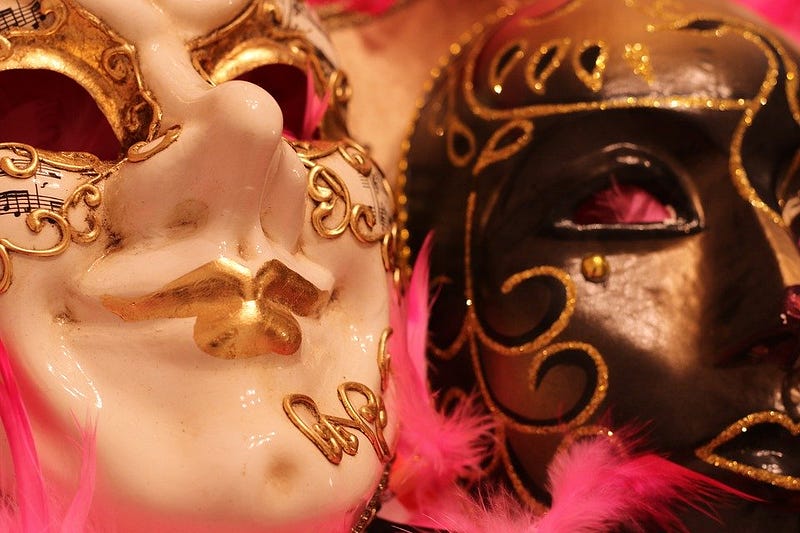
That is why we celebrate Purim by wearing masks (no, not those kinds of masks! Leave those for the medical professionals who need them!), to signify that duality where on the one hand, G-d hid his involvement behind the mask of nature. Still, on the other hand, it was quite obvious who was pulling the strings behind the mask.
So let’s celebrate the miracle of Purim, but let’s try to pay closer attention during the rest of the year and discover the programmer’s hand behind our day-to-day miracles as well!
Comments