See Something? Say Something!
See Something? Say Something!
This Dvar Torah was originally published in Torah && Tech, the weekly newsletter I publish together with my good friend Ben Greenberg. To get the weekly issue delivered straight to your inbox click here.
As Jews, we know that the only way to ensure our future is by looking back to our history, both the happy parts and the sad. This time of year we find ourselves in the mourning period between the 17th of Tamuz (the day the walls of Jerusalem were breached by the Romans) and the 9th of Av (the day the Temple was destroyed).
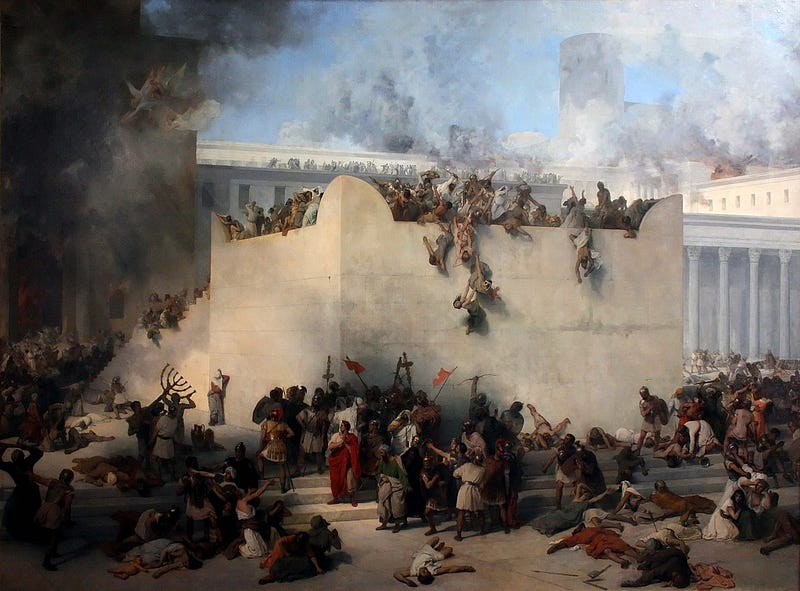
The Talmud (Gittin 55b) relates that the destruction of Jerusalem, like many of our most annoying bugs, was caused by a typo.
One of the wealthy citizens of Jerusalem was making a party and wanted to invite his friend, Kamtza. His servant accidentally invited a different man by the name of Bar Kamtza, a sworn enemy of the wealthy host.
When the wealthy man saw his enemy at the party, he was furious and demanded that Bar Kamtza leave immediately. In an effort to save face, Bar Kamtza offered to reimburse the host for the cost of the entire party, but the host wouldn’t hear of it and had him thrown out in shame.
Bar Kamtza was humiliated! “All of the sages and scholars of Jerusalem were sitting there, and not one of them said a word? I will show them yet!”
Bar Kamtza traveled to Rome and told the emperor that the Jewish people were planning a revolt. The emperor sent his general Vespasian to investigate, and the rest is history.
Reading the story drives home an important point. What hurt Bar Kamtza most, even more than being thrown out of the party of the year, was the fact that no one stood up for him.
Many times we might see injustices taking place. It might be someone getting blamed for something they didn’t do, or a marginalized team member not getting credit for their work (again), not to mention cases of deliberate harassment.
Speaking up in such situations is hard. It can make things awkward; it could pull us into a conflict we have no interest in being part of. At such times we must think of the cost of not speaking up! When we fail to speak up in such situations, we take an active role in making the victim feel isolated and alone.
When the cost of action seems high, we often default to inaction, what we have to realize is that the cost of inaction is usually higher.
Let us not repeat the mistakes of history.
By replacing the “baseless hatred” that destroyed the Temple with “baseless love,” we will merit to have the temple rebuilt speedily in our days!
Shabbat Shalom,
Yechiel
Comments